
There are no kiwi on Great Barrier Island.
It is worth getting that out of the way because otherwise perfectly sensible island guides keep inventing them. Aotea has something better than a borrowed mascot: a collection of native birds that are rare, threatened or already gone from large parts of mainland New Zealand.
You will hear some before you see them. Kākā make a loud, untidy entrance across the canopy. Ruru call after dark. Pāteke appear beside streams and wetlands looking remarkably understated for one of the country’s rarest waterfowl. High around Hirakimata, black petrels return from the Pacific to breed in burrows.
This is not a checklist promising every species before lunch. It is the honest version of the birds of Great Barrier Island: what lives here, where you have a reasonable chance of seeing it, and when the correct response is to leave it alone.
Why Aotea Matters for Native Wildlife
DOC describes Aotea as a refuge for birds that are rare or extinct on the mainland. Aotea has escaped some introduced predators, but rats, feral cats and pigs still put wildlife under pressure.
The numbers make the point. More than 60% of New Zealand’s pāteke population lives on Aotea. The central mountains are the country’s main nesting area for black petrel. The island is also a stronghold for North Island kākā and banded rail, with more than 13 lizard species recorded, including the elusive chevron skink.
That does not make Aotea predator-free. It makes the island unusually important, and worth behaving properly on.
The Birds You Are Most Likely to Meet
Kākā
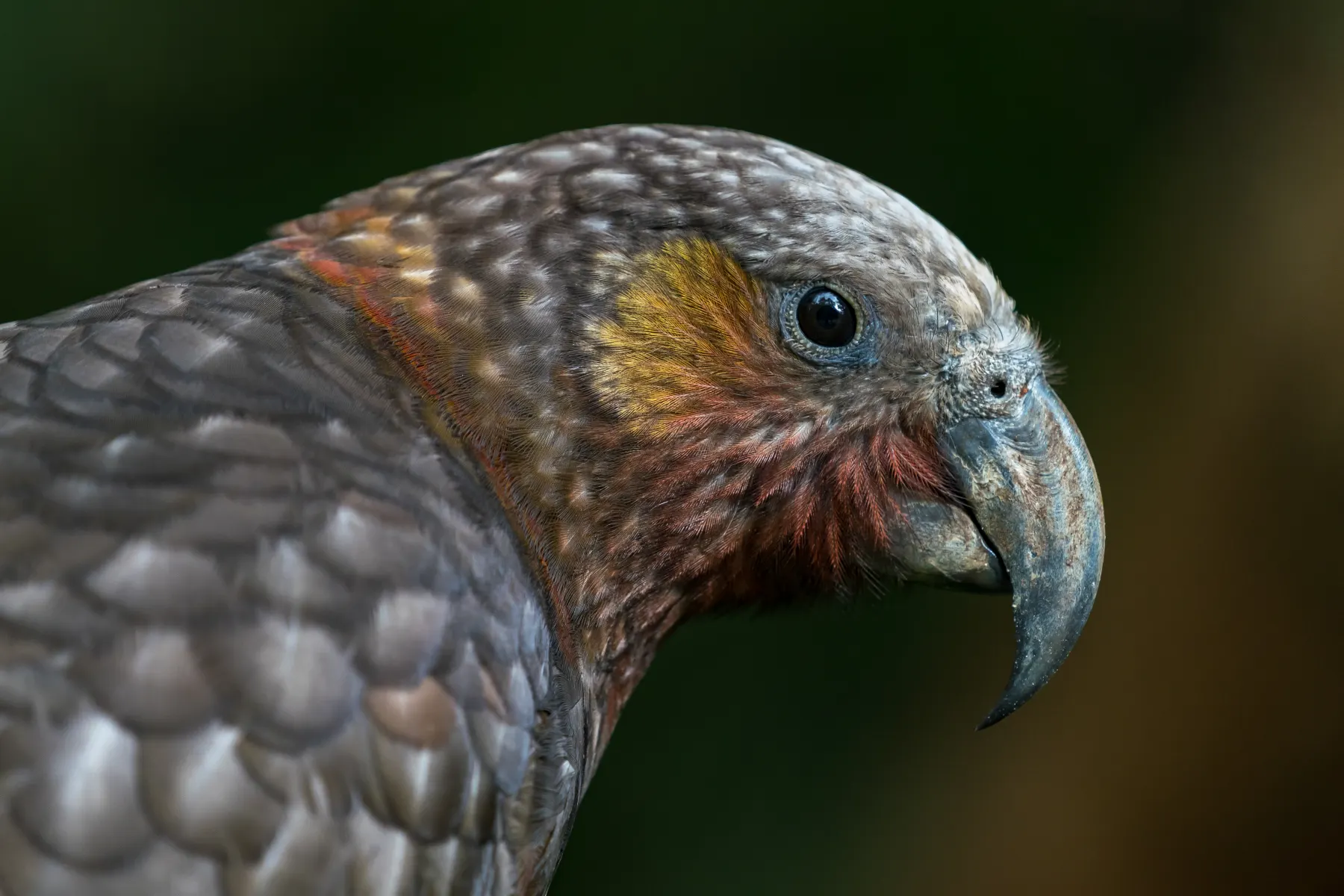
North Island kākā are large forest parrots with brown-olive feathers, flashes of red under the wings and the social restraint of a pub table at closing time. Their calls carry across valleys, especially early in the morning and toward evening.
Aotea supports both permanent birds and visitors moving through the Hauraki Gulf. Look and listen around mature bush, Glenfern Sanctuary, the central tracks and the forest edges around accommodation. They are curious and may come close. Do not feed them; clever parrots become troublesome parrots surprisingly fast.
Pāteke / Brown Teal
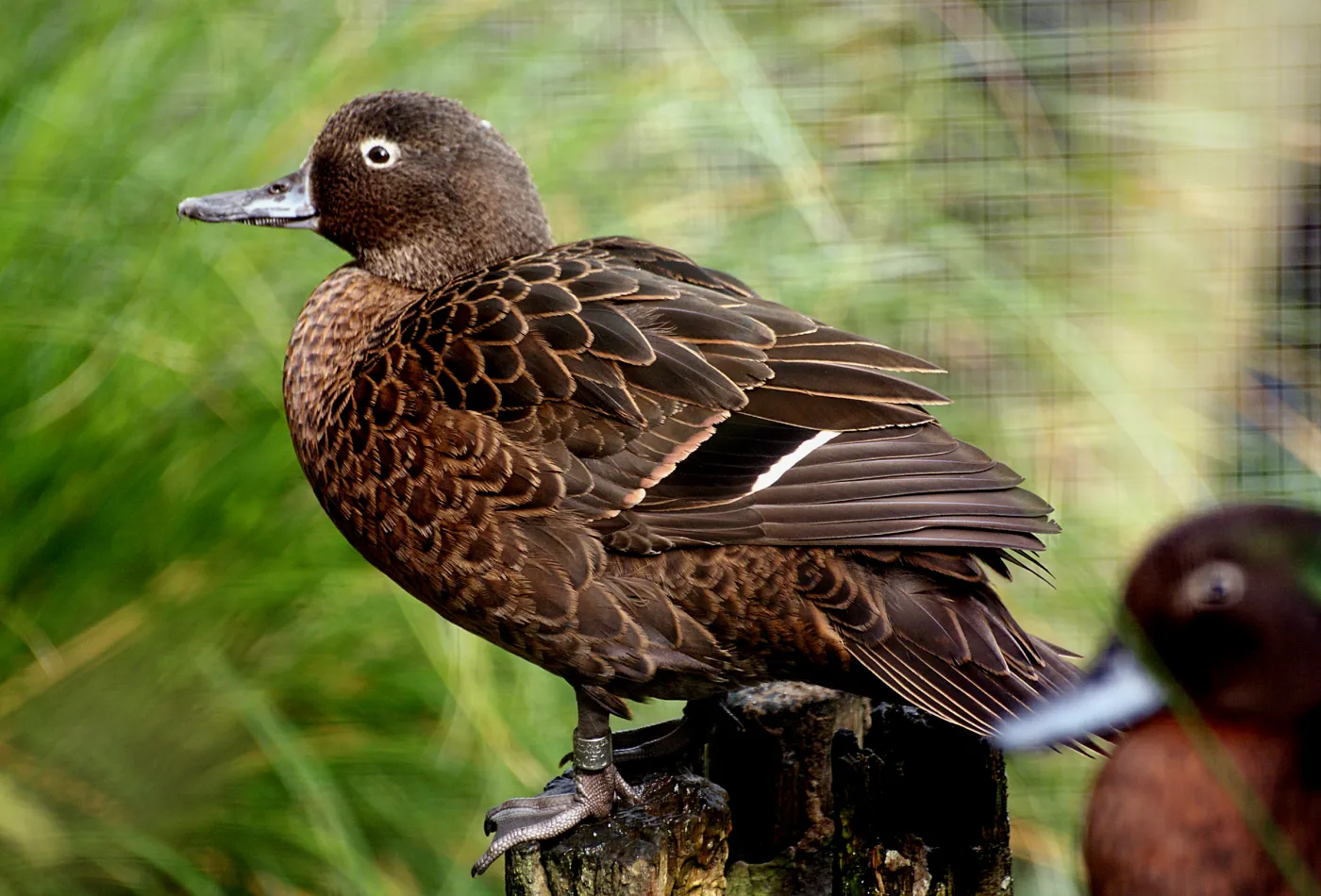
Pāteke are small brown ducks found around streams, estuaries and wetlands. DOC estimates only 2,000–2,500 remain in the wild nationally, while Aotea holds more than 60% of the population.
Whangapoua estuary is a known stronghold, but pāteke also turn up around wet ground and waterways elsewhere on the island. They are active around dusk and can wander onto roads. Slow down when you see the duck signs. They are not decorative council branding.
Tūturiwhatu / New Zealand Dotterel
The east-coast beaches support New Zealand dotterels, including nesting birds around Aotea’s dunes and estuaries. They lay well-camouflaged eggs directly on the ground, which is an awkward strategy on a beach shared with people.
If a dotterel calls, limps or tries to lead you away, you are probably too close to a nest or chick. Follow temporary signs and fences, keep away from marked areas and give the birds a wide berth. Medlands is a long beach. You can spare them a piece of it.
Kererū, Ruru and Moho Pererū
Kererū are common around bush fringes and easy to recognise by the heavy wingbeat that sounds like someone shaking out a sheet overhead. They are important seed spreaders for large-fruited native trees.
Ruru or morepork are usually heard rather than seen. Sit outside after dark and wait for the two-note call. Ruru House did not get its name from a branding workshop.
Moho pererū, the banded rail, is normally a secretive wetland bird. On Aotea it is seen surprisingly often around settlements, mangroves and damp margins. It still deserves distance; familiarity is not an invitation to chase it through the flax for a photograph.
The Bird Most Visitors Will Not See
Tākoketai, the black petrel, spends most of its life at sea and returns to land to breed in burrows. The main Aotea colony sits high around Hirakimata / Mount Hobson.
Black petrels once bred across parts of the North Island and northwest South Island. Introduced predators and habitat loss reduced them to breeding populations on Aotea and Hauturu-o-Toi / Little Barrier Island. On Aotea, pigs, cats and rats remain threats; at sea, birds can be caught while scavenging behind fishing vessels.
You may see black petrels offshore, sometimes feeding near dolphins, whales or boats. Their breeding colony is not a casual birdwatching attraction. Stay on formed tracks, never investigate burrows and keep lights and noise down around nesting country.
Fishers can help by sinking baited hooks quickly and avoiding the disposal of bait or fish waste while lines are being set. That small change matters to a bird willing to follow a boat across an ocean.
Where to Look for Birds on Great Barrier Island
Glenfern Sanctuary, Port Fitzroy: The two-kilometre loop passes regenerating forest and protected habitat. North Island robin / toutouwai have been reintroduced at Glenfern, and kākā and kererū are regular possibilities. Check Glenfern Sanctuary for current visitor information.
Whangapoua wetlands and estuary: One of the best-known places for pāteke. Banded rail, fernbird and other wetland species may also be present. Move quietly and bring binoculars rather than ambition.
Hirakimata and Windy Canyon: Good forest habitat for kākā and, with luck, miromiro / tomtit. Black petrels nest in the high country, but seeing one on land is unlikely and should never involve leaving the track.
Medlands and the east-coast beaches: Watch for dotterel and variable oystercatchers along the beach and estuary margins. Around the bush above Medlands, listen for kākā, tūī, kererū and ruru.
For the tracks, beaches and access details, use the complete things-to-do guide and the Great Barrier Island walks guide.
How to Be Useful While You Are Here
- Keep to tracks around burrows, wetlands and marked nesting areas.
- Never feed kākā or other wild birds.
- Drive slowly near streams, wetlands and pāteke road signs.
- Keep food and rubbish secure so it does not support rats.
- Clean footwear at track hygiene stations.
- Report injured wildlife or deliberate harm to DOC on 0800 DOC HOT (0800 362 468).
- Leave pets at home. The native bush around 175° East is one reason the properties do not accept them.
The best bird encounter on Aotea is rarely staged. It is a kākā crossing the valley while you make coffee, a kererū landing badly in a kānuka, or a ruru calling after everyone else has gone to bed.
Stay quiet for long enough and the island normally introduces itself.
All three 175° East houses at Medlands Beach sit among native bush, with an eight-minute walk to the sand. Explore the island during the day, then listen from the deck after dark. Check availability →
Frequently Asked Questions
Are there kiwi on Great Barrier Island?
No. Aotea has no kiwi. Its notable native birds include kākā, pāteke, black petrel, dotterel, kererū, banded rail and reintroduced North Island robin.
What is the best place for birdwatching on Aotea?
Glenfern Sanctuary is the clearest starting point for forest birds. Whangapoua is important for wetlands and pāteke; Medlands and other east-coast beaches are useful for shorebirds.
When is the best time to see birds?
Dawn and the final hour before dark are usually the most active. Native birds are present year-round, although breeding seasons, food and weather change what you will see.
Can I see birds from 175° East?
Kākā, kererū, tūī and ruru all use the surrounding bush, but they are wild birds and bookings do not come with a performance schedule.
Sources: Department of Conservation — Aotea, black petrel, pāteke, kākā and the Aotea Great Barrier Environmental Trust bird guide. Kākā photograph by Judi Lapsley Miller, CC BY 4.0, via Wikimedia Commons. Pāteke photograph by Bernard Spragg NZ, CC0, via Wikimedia Commons.