
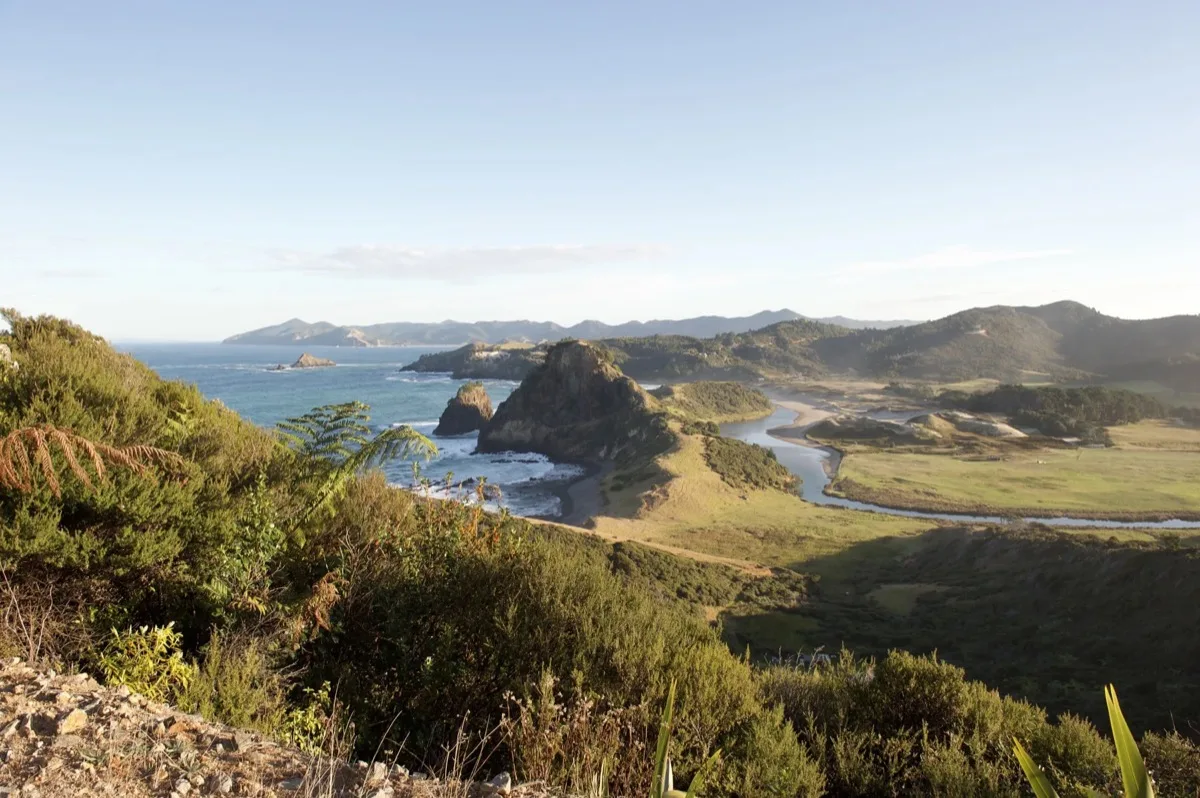
Great Barrier Island — Aotea — has some of the best camping in New Zealand. That’s not a marketing line. It’s just what happens when you combine DOC-managed coastline, almost zero development, and beaches that would headline any national park in the country.
Most sites are Department of Conservation managed: basic, beautiful, and book out fast in summer. A handful of private campgrounds fill in the gaps. None of them have Wi-Fi. That’s the point.
Here’s everything you need to plan your camping trip to Aotea.
The basics
No open fires at any DOC campsite on Great Barrier Island. Bring a gas cooker — it’s enforced.
No dogs at DOC campgrounds.
Bookings: DOC campsites book through bookings.doc.govt.nz. Summer (December–January) books out months in advance — especially Medlands and Awana. The 2026/27 season bookings open 14 May 2026.
Cost: $18/night per adult at DOC campgrounds. Children under 18 are free. Private sites vary.
Water: Treat all campsite water before drinking unless stated otherwise. DOC advises boiling at Whangaparapara.
Getting there: Barrier Air flies from Auckland in 35 minutes. SeaLink runs the car ferry — takes 4.5 hours but means you can bring all your gear without the airline weight stress.
DOC campgrounds
Medlands Beach
The most popular campsite on the island, and arguably the best-located. 120-person capacity, sitting in the dunes at the southern end of Medlands Beach — 1.5km of white sand with consistent surf, a safe estuary for kids, and a craft brewery five minutes down the road.
The DOC campground is right behind the dunes — Oruawharo Creek forms the southern boundary, and the estuary is shallow, calm, and safe for swimming. Toilets and cold showers. It fills fast; book early for any summer dates.
In winter, you might have the place to yourself. For a beach of this quality, that’s remarkable.
Awana Beach
About ten minutes north of Claris on Aotea Road, one of the island’s most popular surf beaches. The DOC campsite sits beside the Awana Estuary at the northern end: 120-person capacity, picnic shelter, 300m walk to the beach.
Bring mosquito repellent — the estuary earns it. Brown teal, dotterel, oystercatcher, and banded rail all nest here. It’s one of the best birdwatching campsites on the island.
The beach itself is longer and more exposed than Medlands, picking up swell components that miss the southern beaches — good for experienced surfers.
Harataonga
A quieter, more remote option reached via Harataonga Road, roughly midway up the east coast. The campground sits between two streams, sheltered under mature pōhutukawa, 300m from Harataonga Beach.
Good fishing directly from the beach. Māori historic sites and settler graves in the surrounding area. The Harataonga Coastal Walk — about 5 hours one way — starts nearby, running the full coastline to Whangapoua.
Best for a full day using the campsite as a base: snorkelling, swimming, hiking. Bring your own everything — no facilities beyond the basics.
Whangaparapara (The Green)
The smallest DOC site on the island — just 15 tents. Very popular with trampers doing the Aotea Track, and for good reason: it sits close to the Whangaparapara Harbour, which is 15 minutes’ walk from Great Barrier Lodge.
The wharf here is one of the best spots on the island for kids to jump into the water. The ruins of the old whaling station sit on the northern shore — the harbour was a working station from the 1890s and the industrial history is still visible in the landscape.
Note: Boil water before drinking (DOC advisory). No fires. 150-person capacity at the broader Whangaparapara area, but The Green itself is strictly 15.
Akapoua Bay (near Port Fitzroy)
A sheltered family camping area with easy water access for kayaking and light fishing. Car and campervan access. A DOC exclusive-use cottage is also available October–May for groups wanting more than tent camping.
Good base for northern walking tracks. Quiet even in summer by GBI standards.
Okiwi
At the northern end of the island near Okiwi airfield, on Mabey Road. North-facing with a different swell window to the east coast beaches — needs a northerly swell component to fire. DOC describes it as close to “a popular surf beach” and it consistently shows up in surf and camping resources as the go-to spot for northern island beach camping.
At the northern end, a short walk leads to the Wairarapa Graves — the burial site for some of those drowned when the SS Wairarapa ran aground at Miners Head on 29 October 1894, one of New Zealand’s worst maritime disasters.
Private campgrounds
Sugarloaf Campground
At the southern end of Kaitoke Beach — one of the better private options on the island. Good shelter from macrocarpa trees, more privacy than the exposed DOC sites. Rock pools (“mermaid pools”) nearby are worth exploring at low tide.
Access via Sugarloaf Road from the southern end of Kaitoke.
Great Barrier Island Campground (Tryphena)
12 acres, 200m from Tryphena Beach, harbour views. Eco toilets, showers. $10/person/night. Contact: 021 298 8905.
A good option if you’re arriving on the SeaLink ferry — Tryphena is the main ferry port.
Aotea Track huts
If you’re doing the Aotea Track — the island’s multi-day inland trail — the two DOC huts are the accommodation:
Mt Heale Hut (20 bunks) — reached via Windy Canyon and Palmers Track, about 3–3.5 hours from Aotea Road. Two deck areas with sweeping views of the Hauraki Gulf and Hauturu/Little Barrier Island. $25/night adults.
Kaiaraara Hut (28 bunks) — wood stove, gas cooking. Below the hut, the foundation timbers of a 1920s kauri dam are visible in the streambed. $25/night adults.
Hut bookings are essential — bookings.doc.govt.nz.
Tips for camping on Great Barrier Island
Book early. Medlands and Awana fill weeks in advance for Christmas and New Year. If you’re coming in January, book the day the season opens.
Come in winter. May to September, you’ll often have a campsite entirely to yourself. The dark skies are longer and clearer. The surf is consistent. The mozzies are mostly gone. It’s cold at night — bring a proper sleeping bag — but the trade-off is silence and space that simply doesn’t exist in summer.
Gas stove is non-negotiable. No open fires at DOC sites, no exceptions. A small backpacking stove is fine.
Stock up before you head out. The stores in Claris and Tryphena carry the basics, but selection is limited. If you’re heading to the west coast or north, the Port Fitzroy Store (Mon–Sat, 9am–5pm) is the only option — plan around it.
Treat water. All campsite water should be boiled or filtered unless you’re at a site with confirmed treated supply.
Bring mozzie repellent. Especially if you’re camping near estuaries (Awana, Whangaparapara). The birdlife is worth it — but so is the repellent.
Not a camper?
If you want to be at Medlands Beach — the best beach on the island — without the sleeping bag situation, 175° East has three off-grid solar-powered houses: Pītokuku House, Ruru House, and Tree House. All sleep large groups, all fully equipped, all 8 minutes from the sand. The DOC campground is literally your neighbour.
More on Great Barrier Island: Things to Do · Walks & Hikes · Kaitoke Hot Springs · Getting Here