
Most people visit Great Barrier Island in summer. They get the full-on version: warm surf, long evenings, the beach buzzing with families. It's wonderful, and you should do it.
But winter here? That's a different island entirely.
Between May and September, the visitors thin out. The beaches empty. The bush gets wet and loud with birdlife. The nights turn cold and clear — so clear that the Milky Way comes up like a wall across the sky. The Kaitoke Hot Springs, which sit at the end of a 40-minute bush walk, steam gently in the cold air. And a fire in the woodburner at one of the houses feels like exactly the right thing to do on a Thursday night when the rain comes in off the Hauraki Gulf.
This is the version of Great Barrier Island most people don't know about. It's quieter, more intimate, and honestly — more itself.
The Island in Its Natural State
Great Barrier Island — Aotea — has no mains electricity, no traffic lights, no supermarkets, and no real rush hour. In summer, it fills up enough that you notice other people. In winter, it returns to something closer to its natural rhythm.
The permanent population is around 1200 people. In winter, that's roughly who you'll share the island with — locals, a few regulars who know what they're doing, and the occasional visitor who's done their research. The result is that places you'd queue for in January are yours in July. Medlands Beach on a winter morning: yours. The Aotea Track on a crisp afternoon: yours. The hot springs on a cold Tuesday: almost certainly yours.
Solitude isn't a bug here. It's the whole point.
Warmth Where It Counts
Off-grid doesn't mean cold. The houses at 175° East are built for exactly this kind of weather.
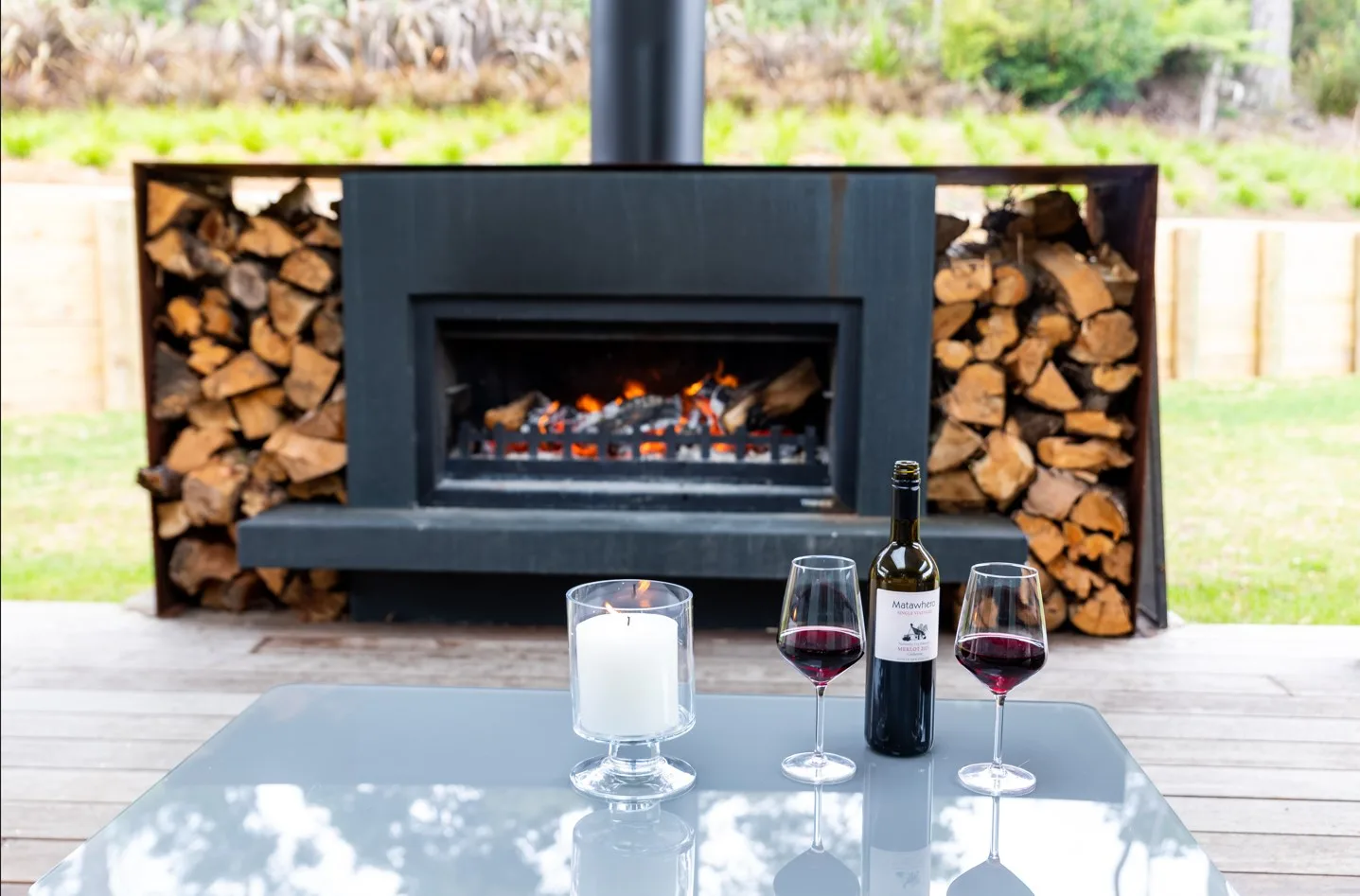
Pītokuku House, Ruru and Tree Houses all have wood burners — the kind that heat a room fast and keep it going all evening. Pītokuku House has an outside fire that turns the space into a proper winter refuge. Full kitchens mean slow-cooked dinners, good wine, and nowhere you need to be. Solar still powers everything — hot showers, full lighting, Nespresso.
Stargazing Season
Great Barrier Island is New Zealand's only Dark Sky Sanctuary outside of the South Island. The designation means the island has strict outdoor lighting controls — no light pollution spills into the sky. In summer, late sunsets cut into your dark-sky window. In winter, darkness comes early and stays long.
On a clear winter night, the view overhead is extraordinary. The Milky Way runs from horizon to horizon. The Magellanic Clouds — two satellite galaxies of the Milky Way — hang above the southern horizon like a second and third moon. Constellations you've heard of but never quite seen properly suddenly make sense.
You don't need a telescope. You don't need an app. You just need a dark field, a clear sky, and about 15 minutes for your eyes to adjust. The island handles the rest.
Clear nights after a front passes through tend to be the best. In winter, those come regularly.
Kaitoke Hot Springs in the Cold
The Kaitoke Hot Springs are a 40-minute walk through native bush — flat, easy, and completely free. They're good in summer. They're something else in winter.
There's a particular pleasure in walking a cold, damp bush track and arriving at naturally warm water. The springs sit in a small stream valley, shaded by the canopy, with no signage, no kiosk, no entry fee. Just the pools, the trees, and — in winter — very few other people. The contrast between the cold air and the warm water is exactly as good as it sounds.
Take a towel. Wear shoes you don't mind getting muddy. Go in the morning before the clouds come in.
The Practical Bit
Winter rates at 175° East are the best of the year:
- Tree House — from $225/night (sleeps 6)
- Ruru House — from $275/night (sleeps 7)
- Pītokuku House — from $325/night (sleeps 10)
Getting here: Barrier Air flies from Auckland in 35 minutes. FlyMySky and SeaLink also service the island. The ferry takes longer but the crossing through the Hauraki Gulf in winter conditions is its own kind of adventure.
The island has two small 'supermarkets' — key tip to bring any favourite supplies from the mainland. Aotea Brewing (our neighbour, a few minutes walk) does excellent craft beer. Aotea Roast (our other neighbour) does off-grid coffee that will ruin you for city café coffee. The Currach Irish Pub in Tryphena is reliably good for a meal and a warm room.
Why Winter Works
There's a version of a holiday that's about doing as much as possible, and a version that's about slowing down enough to feel like yourself again.
Great Barrier Island in winter is firmly the second kind. The weather gives you permission to stay inside and do nothing. The nights give you something worth seeing. The bush is louder, wilder, and wetter than in summer — in a way that feels more honest.
If you've been to the island before, winter will show you a different one. If you haven't been yet, winter is a very good introduction.
The island in summer is full of people who've discovered it. The island in winter belongs to the people who knew first.